
Back to Blog
IMMIGRATION GUIDESJune 26, 20266 min read

Understanding the Ontario Immigration Act and OINP: Your Pathway to Immigrating to Canada

This guide delves into the Ontario Immigration Act and the Ontario Immigrant Nominee Program (OINP), providing prospective immigrants a clear understanding of key regulations, eligibility criteria, and steps to apply successfully.

Understanding the Ontario Immigration Act and OINP: Your Pathway to Immigrating to Canada
V

Need personalized help? Skip the research and connect directly with a licensed RCIC expert on Verixa. Find your consultant →

Summary: Understanding the Ontario Immigration Act and OINP

The Ontario Immigration Act, 2015, is a critical legislative framework for individuals seeking to immigrate to Ontario, Canada. This comprehensive guide delves into this Act and its associated Regulations (O. Reg. 422/17), focusing on the Ontario Immigrant Nominee Program (OINP). Readers will discover the key eligibility requirements, integration of the Express Entry system, and how to apply successfully.

Direct Answer

  • What is the Ontario Immigration Act, 2015?
    The Ontario Immigration Act establishes the legal framework for managing immigration in Ontario, including responsibilities and procedures for the Ontario Immigrant Nominee Program (OINP).

  • How can the OINP benefit prospective immigrants?
    The OINP allows the province to nominate immigrants who meet specific requirements for permanent residency in Ontario, meeting the needs of Ontario’s labour market.

Introduction to the Ontario Immigration Act, 2015

The Ontario Immigration Act, 2015, serves as the foundation for immigration processes in Ontario. Enacted to regulate and guide provincial immigration, it integrates several programs, including the OINP. This Act works in conjunction with federal policies, making it a crucial tool for international applicants aiming to establish their career and life in Ontario.

Detailed Overview of Ontario Immigration Act Regulations (O. Reg. 422/17)

O. Reg. 422/17 outlines the regulations under the Ontario Immigration Act, 2015. Key components include definitions, eligibility requirements, and processes for various immigration categories.

Important Definitions

  • Canadian Language Benchmarks: Used to assess language proficiency in English and French.
  • Express Entry System: A federal immigration system for skilled workers.
  • National Occupational Classification (NOC): A system that categorizes occupations based on skills and qualifications.

Eligibility and Application Protocols

Regulation O. Reg. 422/17 specifies eligibility for various categories including foreign workers, international students, and in-demand skills. It mandates interviews, employment criteria, and residency intentions.

Understanding Ontario Immigrant Nominee Program (OINP)

The OINP is a significant pathway for those seeking to immigrate to Ontario. It allows foreign nationals to apply for a certificate of nomination, leading to permanent residency. Candidates are assessed based on their ability to contribute to Ontario's economic development.
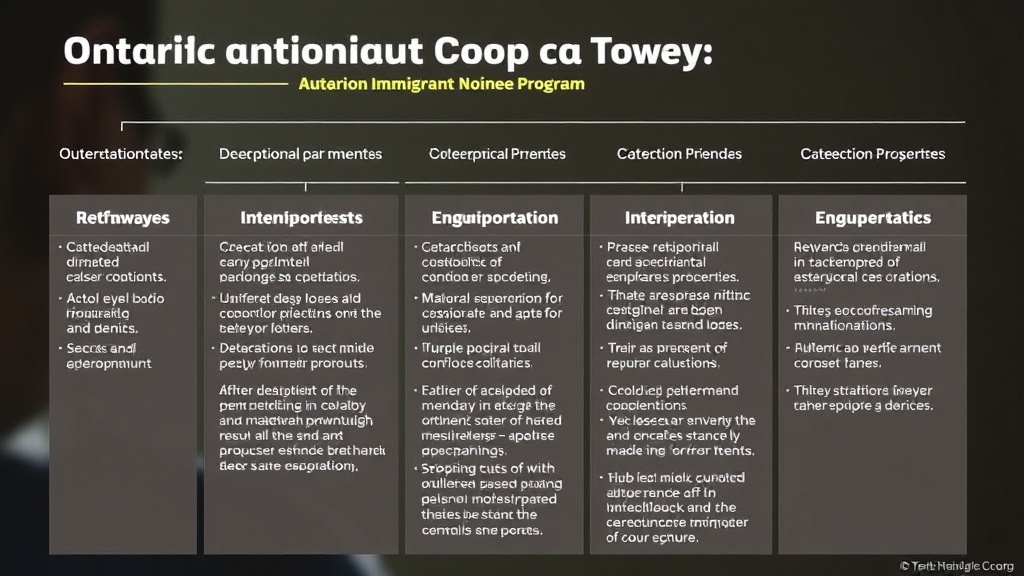
A visualization showing the different pathways and categories of the Ontario Immigrant Nominee Program, highlighting various occupational and educational requirements.

Key Eligibility Requirements for OINP

OINP eligibility requirements vary by category:

  • All Categories:

    • Must be a foreign national
    • Intend to reside in Ontario
    • Temporary residents in Canada must comply with federal regulations
  • Foreign Worker:

    • At least two years of work experience in relevant NOC occupation
    • Proof of job offer in Ontario
  • International Student with Job Offer:

    • Proof of degree or diploma from a Canadian institution
    • Job offer from an eligible Ontario employer
  • In-Demand Skills:

    • Employment in a high-demand occupation
    • Language proficiency at Canadian Language Benchmark 4

Role of LMIA in the Ontario Immigration Process

The Labour Market Impact Assessment (LMIA) is a crucial step in hiring foreign workers. Ontario employers must show efforts to fill positions with Canadian citizens or permanent residents before offering jobs to foreign nationals.


LMIA Process

Understanding the Latest March 31 Express Entry Draw Specifics
Related Insight

Understanding the Latest March 31 Express Entry Draw Specifics

On March 31, 2026, the Canadian Experience Class (CEC) Express Entry draw issued 2,250 invitations to apply for permanent residence. Candidates needed a Comprehensive Ranking System (CRS) score of 509 or higher due to a reduced number of invitations. This article delves into what influenced the increased CRS cutoff and outlines expectations for upcoming immigration draws.

Continue Reading
  • Employer Application: Apply for LMIA by demonstrating need.
  • Assessment Factors: Includes skill shortages, wage consistency, and job advertising efforts.
FactorDescription
Advertising RequirementEmployers must advertise jobs for at least 4 weeks.
Wage StandardsMust meet provincial wage norms.
Recruitment EffortsShow proof of hiring attempts locally.

Express Entry System and OINP Integration

The Express Entry system is integrated with the OINP to streamline processes for skilled workers. Through this system, applicants can receive a notification of interest from Ontario if they meet specific criteria.

Benefits

  • Streamlined Processing: Faster pathways for high-demand occupations.
  • High Success Rate: Candidates have higher chances of nomination when aligning with Ontario’s needs.

In-Demand Occupations under OINP

The OINP identifies occupations that are essential to the development of its economy. These fall under the TEER category and include roles in agriculture, transport, and technology.

Occupation Examples

NOC CodeOccupation
44101Home Support Workers
75211Railway and Motor Transport Labourers
94200Motor Vehicle Assemblers

An infographic displaying a few in-demand occupations in Ontario, with statistics on employment trends in these job categories.

Applying for a Certificate of Nomination

To apply for a certificate of nomination in the OINP:

  1. Receive a Notification of Interest: Indicates eligibility to apply.
  2. Submit an Application: Complete the form and provide supporting documents.
  3. Attend an Interview: If required by the Director.

Practical Steps

  • Validate your job offer and ensure it meets program criteria.
  • Gather documentation, such as education and work experience records.
  • Monitor deadlines for submitting applications and responding to inquiries.

Interview with Director: What to Expect

Applicants may be required to attend an interview to affirm details provided in their application:

  • Preparation: Bring all required documents.
  • Focus: Highlight your intentions to settle in Ontario and contribute to its economy.
  • Questions: Be ready to discuss your professional background and future plans.

Business and Employer Requirements for OINP

Employers play a vital role in the OINP process. They must:

  • Ensure business activity for at least three years.
  • Meet financial criteria relative to business location.
  • Maintain employment standards per the National Occupational Classification.

An image showing a business meeting with an Ontario employer discussing immigration opportunities and the role of LMIA in OINP applications.

Summary

Understanding the Ontario Immigration Act and the OINP is essential for successful immigration to Ontario. By meeting eligibility requirements and aligning with in-demand occupations, prospective immigrants can significantly enhance their chances of successful settlement in Canada.

Call to Action: Find verified consultants on Verixa to guide your immigration journey. Our platform connects you with licensed RCICs who can provide personalized assistance and support throughout your application process.